Evolution of mills
Our distant ancestors used two stones to crush wheat by banging them. 2000 years before J.C., we talked about 2 wheels turning on each other activated by the man's arm.
Then, the animal was used, the slaves to run the collective mills.
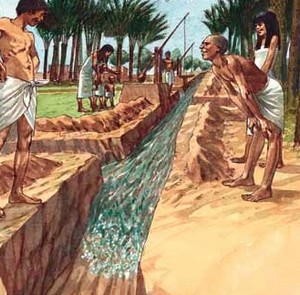
To cultivate men needed water and irrigation, before J.C. there are irrigation networks between the tiger and the Euphrates.
The water mill would be the diversion of an irrigation mechanism.
Indeed, one of the oldest uses of hydraulic energy is noria, lifting wheels which make it possible to bring part of the water used to move them even in irrigation pipes.
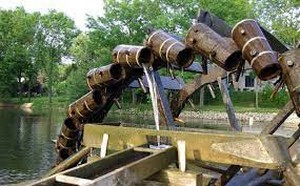
Use the energy of the water with a paddle wheel and connecting rods under the Ottoman Empire, for example to saw stones and build buildings.
The Romans invented horizontal wheel variants which made it possible to directly cause the rotating wheel.
A civil servant in the army, then in the water service, Vitruve is the author of an architecture treaty with remarkable posterity, because he is the only preserved treaty of antiquity, but also by its originality.
Marcus Vitruvius Pollio, known as Vitruvian, is a Roman architect who lived in the 1st century BC. AD (we are born his birth around 80 BC and his death around 15 BC
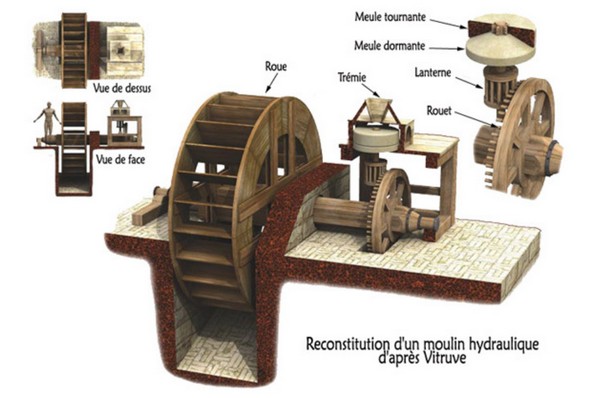
The mechanisms of the Vitruvian era had nothing to envy to the mechanism of the Middle Ages.
There was already a lantern, a wheel, a dormant wheel and a rotating wheel.
If the water mills multiply in the Carolingian era, windmills were not generalized until the 12th century.
In all cases, their construction represents such an important investment that only local lords or religious can finance it.
Until the Revolution, the miller is therefore only a common mill user: he must donate to the Lord part of the grain that is brought to him.