The mills along the Gouët

Les Moulins du Gouët

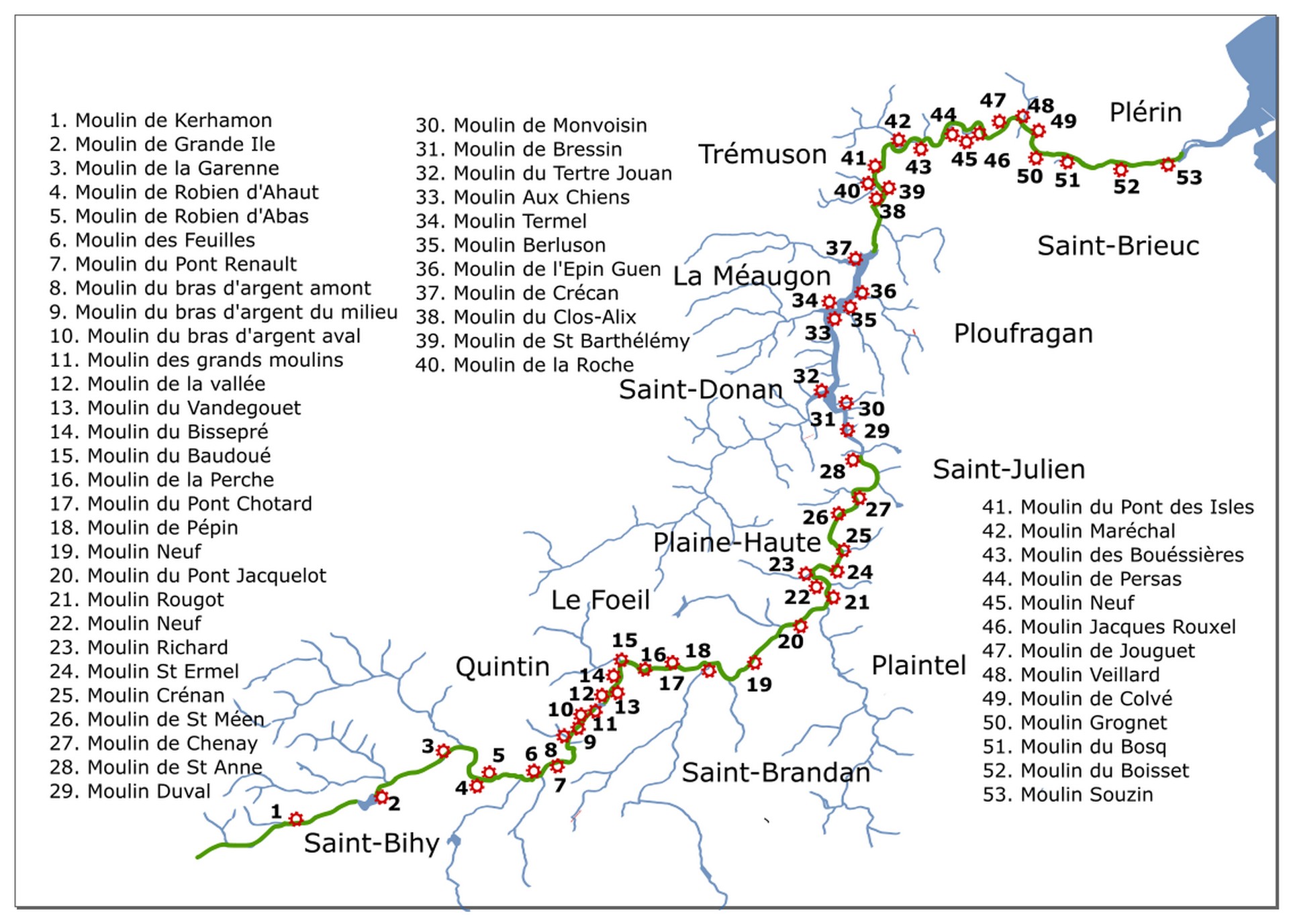
There are about 53 mills on the gouët, if we add our tributaries, we arrive at more than 100 mills on all the streams in the watershed.

It was necessary to deploy a lot of ingenuity and huge work to make the most of the energy of these touts small rivers by derivations, rods, dikes and retained of water.

The mills were free energy sources and then by the fact of a significant consumption of flour in the past centuries: in the 19th century, French ate 600 g of bread per day against barely 130 g today.

Then, the cereal mills produced a large amount of wheat, barley, spelled and buckwheat and meteil flours.

The mills state sources of income for the lords and the ecclesiastics.

Their use is compulsory for the population because they are struck by the right of banality (tax, tithe) The marshal mill had to pay a tithe of 4 tons which corresponded to 144 bushels.

Lords sometimes increased banalities by modifying the size of the bushels which were to be filled to the brim (res, also ground, rais or rays or just: old French measures, for dry materials such as grains).

The old confessions on parchment, following conflicts between the ecclesiastics (who also had mills) and the lords often allow us to find the construction dates of the mill.

These mills, particularly numerous in the 18th century, was gradually supplanted in the 19th century by flour mills operating in steam and then electricity.
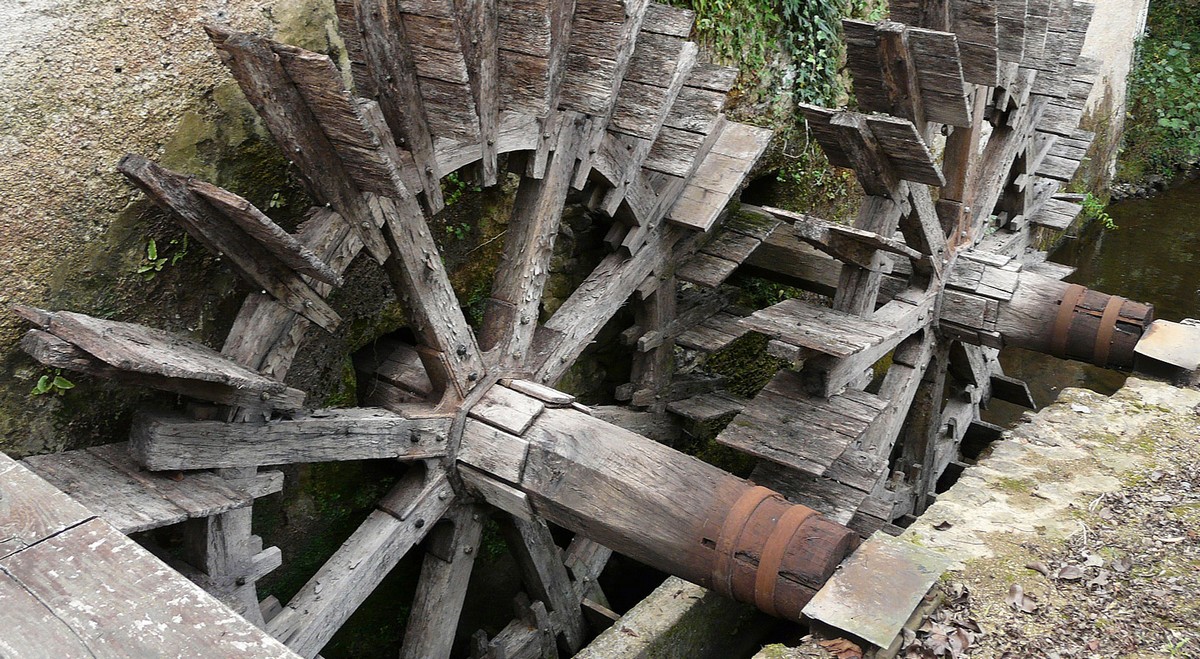
The Marshal mill had 2 wheels and 2 grinding meals for flour and one for animals.

These grinders were installed in height so that by gravity in the chutes the molded falls into the blutoir or directly in the bag for the peck.

The mill was built to provide flour to the Lord of La Roche-Suhart

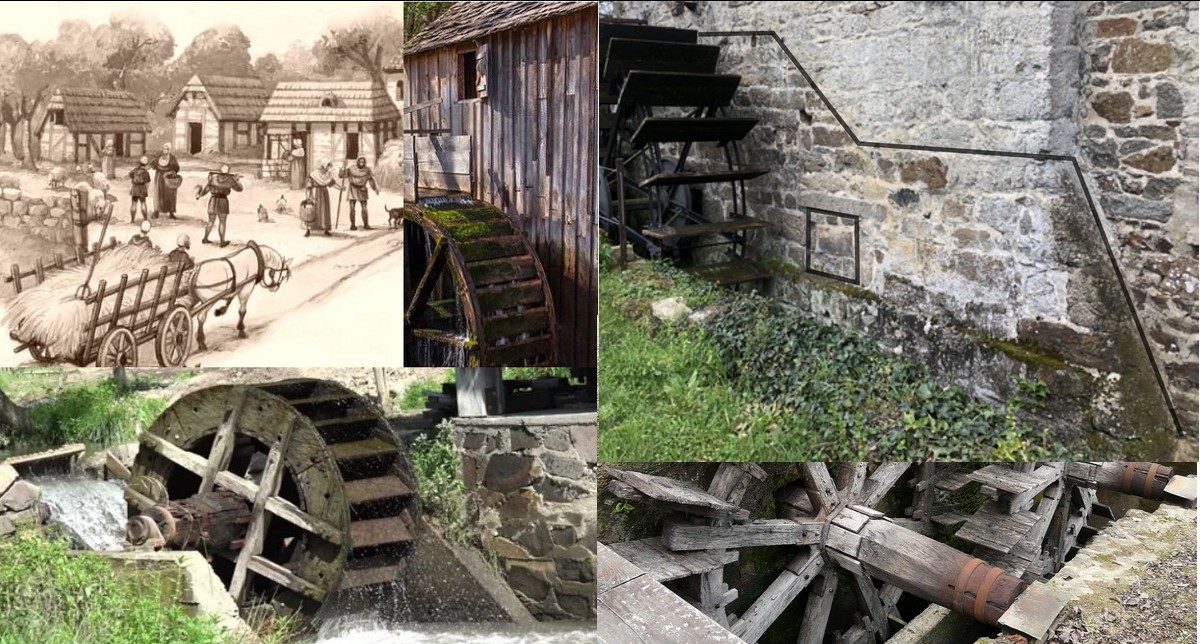
At that time the wheels were installed between two walls of the bief the rest of the building was made of wood

The stones were primarily reserved for the construction of the castle.

The wheels were placed on stone levels The black features indicate the location of the second wheel and the first wall on which was placed the wooden room in the mill.

jupiter2

Inside the mill

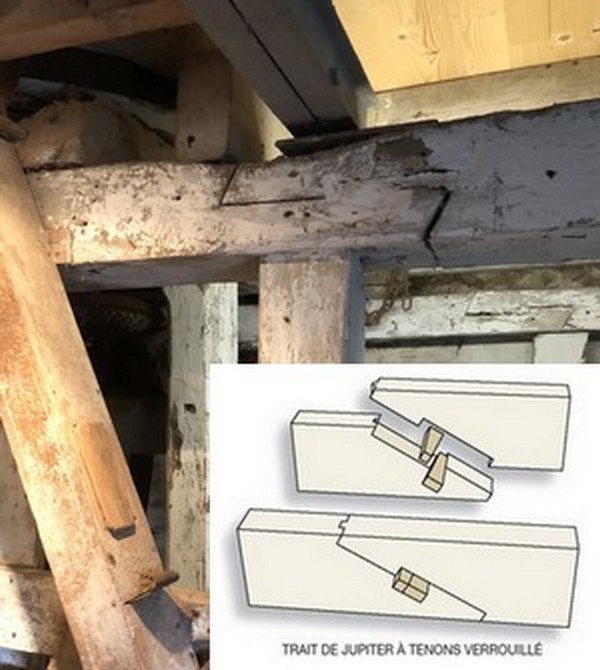
We find the original beams of original

The carpenters of the time used trees of trees cut with an erminette to make the supports of the wheels. The assembly of the beams was in line of Jupiter.

The trait of Jupiter is an assembly of the frame which takes its name from its form in zig-zag (the lightning being one of the attributes of Jupiter, king of the Roman gods and God of heaven).

This assembly is used to assemble pieces at the end (outlet), lengthwise. There are several variants, more at least elaborate, depending on the application

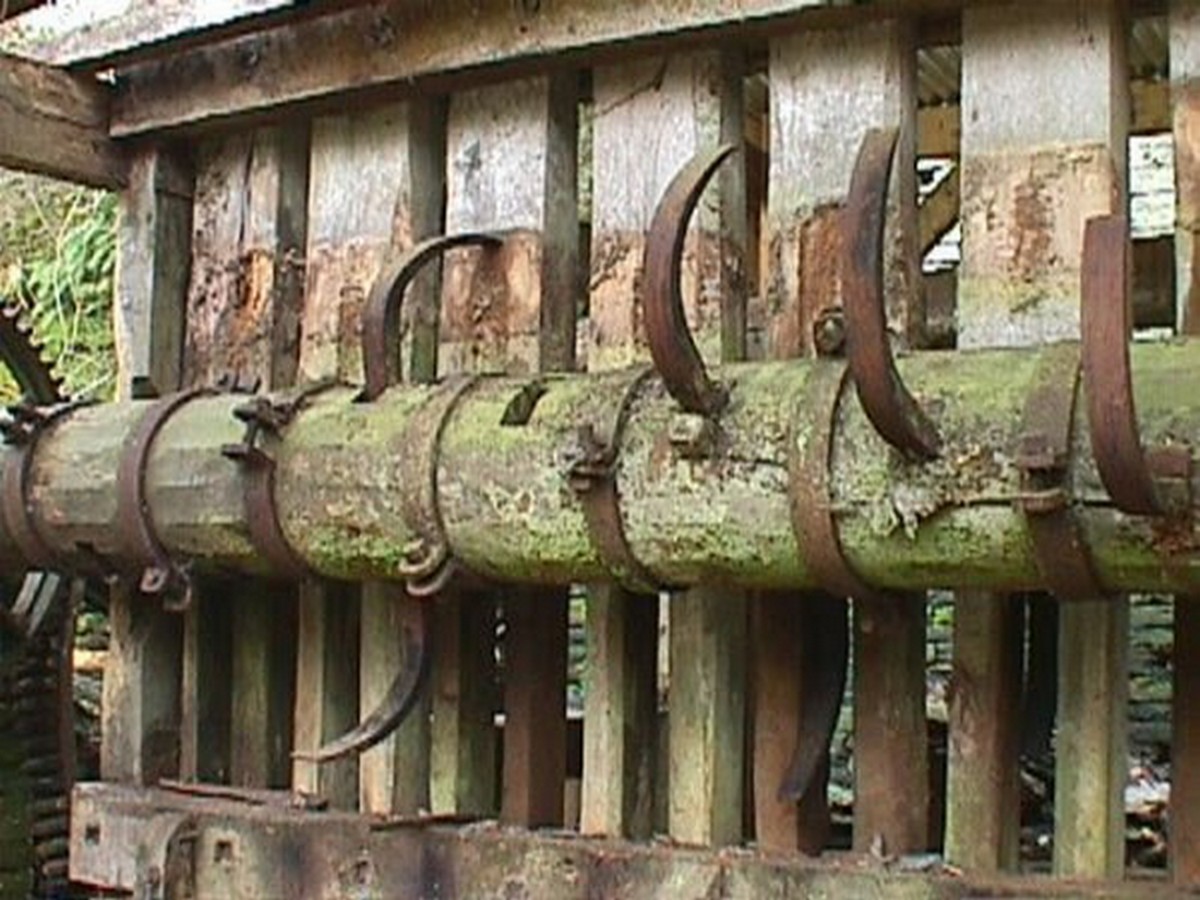
On the underside the extraction is carried out by two endless screws.

Flour production was not the only activity in the milling

. There were also found mills in which hemp and flax were stretched out to make it textile wire (linen was planted near the sea and then worked in Quintin)

Moulins activating the looms to weave drapery, Moulins à Tan where we crushed the oak bark (the tan) before using it in tanning for the tanning of leathers, paper mills,

Moulins that made nuts (Moulin de Jouguet), brushes (Boissières mill) or that operated the machines of sawmills and forges.

The Moulin des Bouéssières side Saint Brieux was a Tan mill. The Tan mill was to reduce the oak or chestnut bark to powder to extract the tannin used for the tanning of skins

Link to archives:ok