Before 1287

osisms

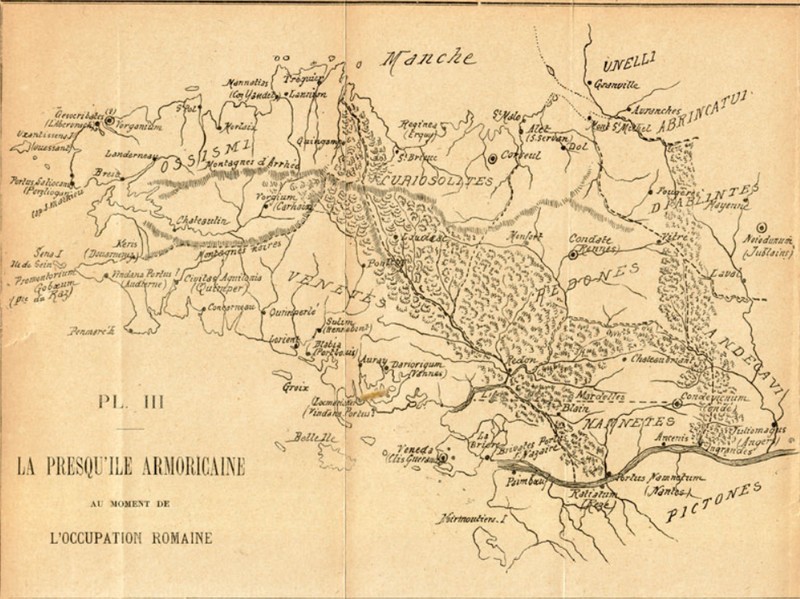
Armorican peoples

Most Armorican cities were built on the promontories, a short distance from the shore. The cities were rare, they were rather entrenched positions, where the population found an asylum in the event of war.

Five peoples occupied the Armorican Peninsula:

The Namnètes, whose capital was probably Candevincum (Nantes);

The venètes, with Dariorigum (Vannes) for capital (before the Roman conquest, the capital was probably in Locmariaquer);

Osismians, Vorganium capital (Carhaix), and main cities aquilonia, Gesocribate.

Curiosolitis, - Fanum Martis (Corseul) Capitale, and main cities: Kozieoudet (Ieaudet, Guéodet, Vetus Civitas), Alethum (Aleth).

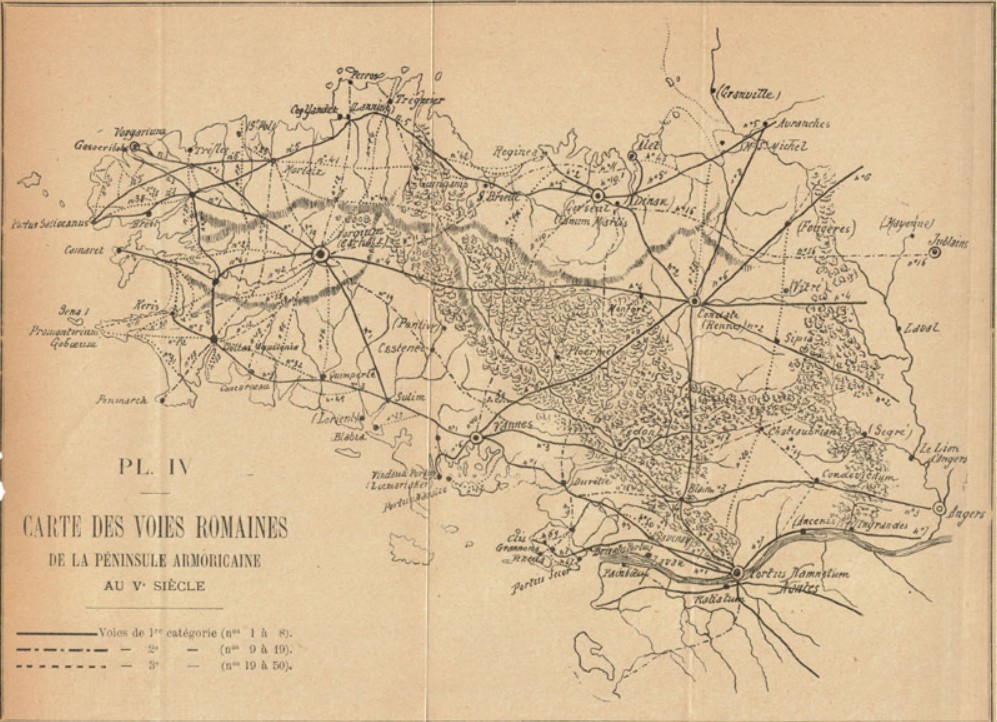
These peoples maintain trade relations with each other and an important network of routes already exists long before the Roman conquest. The four centuries of occupation will make it possible to perfect and maintain this network for often military purpose

The old ways of the region.

Given the different sections of identified tracks, a hypothesis is as follows: the way from Gouarec stops at the Plérin ramps.

At this place, she joins another ancient path from the north and joins Le Gouët near her mouth in a place called Carrefour du Pré a à Doré.

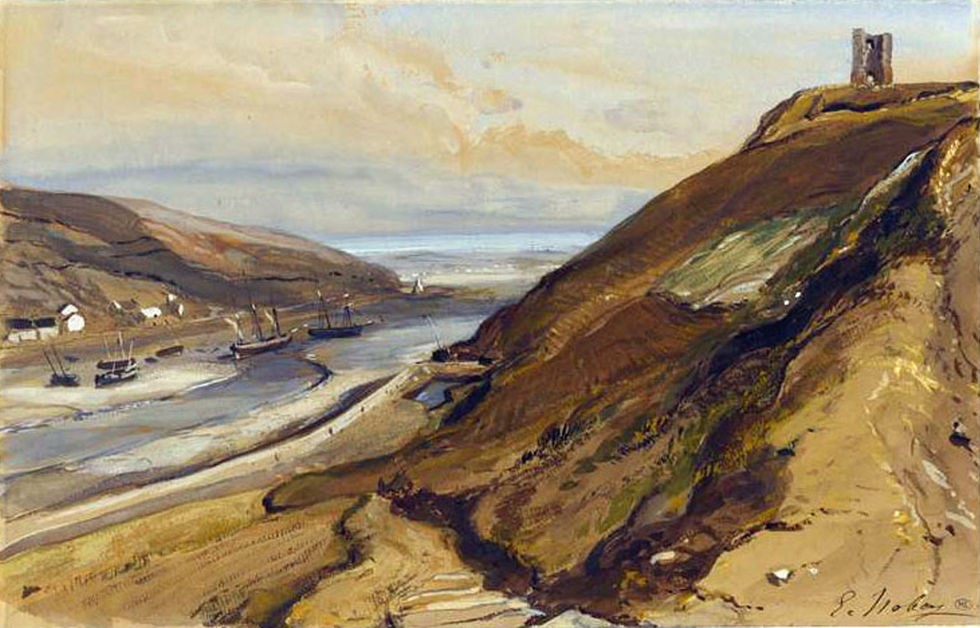
The path seems to cross the Gouët 200m south of the Tower of Cesson, then crosses the bay of Saint-Brieuc to reach Hillion.

300m south of the Erdoré city, a branch stands out northeast to reach the Pointe du Roselier.

From Trémuson, the way seems to be heading towards the Pointe du Roselier en Plérin where a protohistoric barred spur was reported.

The Inrap 2018 preventive excavation report specifies that the path "could serve both oppidum and the various ancient establishments in the sector, including the Villa de Port-Aurel.

The way was to follow the limit of Pordic and Plérin by the High Street and the Sépulcre. Further east, there is a possible extension to the town of Plérin by the city-au-Roux. This route is probably medieval.

Boisboissel

Bois-Boissel dominates access to the Le Gouët river. The name Gouët would come from the Breton word "Gwed" (i.e: blood), name that could be given to him following the Vikings massacre by the Bretons, which would have made the Red Blood River.

The location of the Bois-Boissel hill was therefore very conducive to the protection of this border. Faced with the Viking invasions, it made it possible to monitor access by sea and prevent them from being able to take a stand on the heights.

The stronghold of Bois-Boissel was therefore a stronghold of strategic importance, especially if we consider that many trade was made by sea.

The Tower of Cesson, about four kilometers to the east, is a county possession in the Middle Ages. This tower and wood-boissel therefore form a very old defensive device which protects access by sea to the city of Saint-Brieuc.

binious

the boxwood

Marshal's mill was formerly called : the mill of Bouëxières . Bouëxières means: a place of planting boxwood . Often found plantations of boxwood near the ancient Roman mines.

The words bouëxières, bouessières, Buxieres, Boessières, Boissières, Bussy, Bussieres come from the word: Buxus (boxwood in Latin).

Often these places have been occupied by the Romans. This shrub grows naturally in France in many areas , but more rarely in Britany due to lack of limestone.

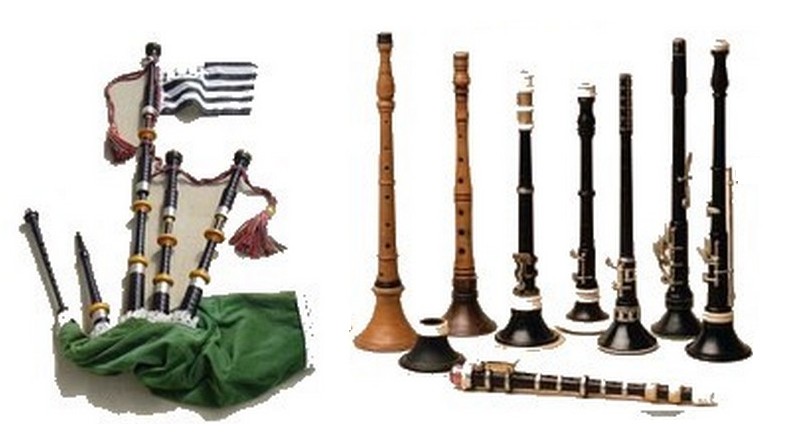
Gallo- Romans planted boxwood in Britany because they liked to surround their properties with evergreen shrubs , they used the boxwood to make all kinds of tools , rods and spinning wheels bagpipes.

They also used the box as fuel in lime kilns. Some molds were made with boxwood or holly, plaster or sand.

Today the plots cadasterised : 539.1392 1393 are part of the "coast to the boxwood" and the street Bouessières is near to the Marshal's mill.

Into the cadastral of Plérin village (1813) on the road overlooking the coast with boxwood denominated, we can see La Boissiere ( with "s" long ) and the name of bridge near mill Marshal mill was the bridge Boissières .

The large stands of boxwood operated long rotations in Côtes d'Armor (80 hectares ) are near Belle -Isle-en -Terre.

Armoricans and Bretons

The Armoricans only showed themselves bellicious on occasion: they hardly took up arms only to defend their territory.

When they had entered the offensive and defensive alliance of the Gallic cities during the war against the Romans, they were the most ardent in the supreme struggle

Caesar saw only one way to tame them, following the victory, it was to be relentless and frighten them by the punishment; The entire Senate of Venets was condemned and all the senators put to death.

In the 5th and life, other arrivals, of a common origin with the tribes of Gaul, fleeing the arms of the angles and the Saxons, received hospitality on the beaches of the Armoricus.

It was from these newcomers that the Western Armorica took the name of Brittany.

Semi-legendary history. It is from Conan Mériadec that the successive invasions date that justify the name of Brittany.

This prince, who enjoyed a fairly large credit in Great Britain, proposed, in 382 or 383, to Maxime, governor of the island, to support him in his revolt against the Emperor Gratien, and he provides him 10 000 men.

Winner and master of more than half of the Western Empire, Maxime granted his ally the sovereignty of most of the Armorica,

In 510, King Breton Budic submitted to Clovis; His descendants, while continuing to reign, only took the title of counts; However, the Bretons were only subject to the names to the Franks, they were often in insurrection.

The ravages of Vikings (Normans)

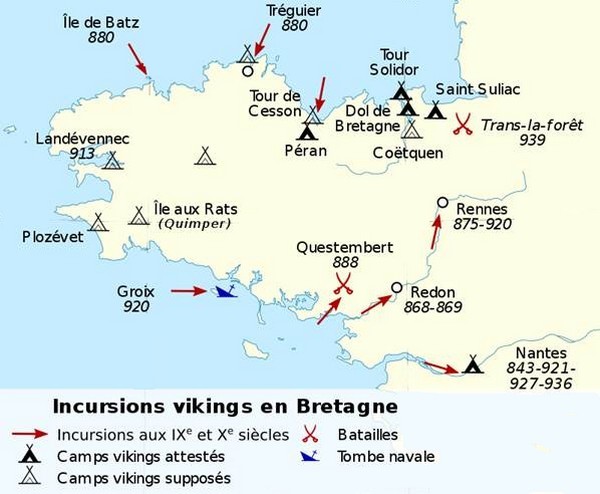
In 848 the Normans, under the leadership of Hastings, ravaged the entire Trieux Valley and completely destroyed the minihy-Briac monastery (Minihy de Briac).

The chronicles of this time are filled with details on this invasion, but none of these stories speak of Guingamp, yet placed on the road to looters.

The Vikings go up the Loire take Nantes and Angers. On November 8, 853, Chef Viking Hasting Attack and Fire Tours, as well as the Saint-Martin basilica.

Norman invasions always occurring at the mouth of rivers or large rivers, the first fortresses intended to fight them were built on the steep shores of these rivers:

This is why we live in our region the fortresses of La Roche-Jagu, La Roche-Derrien, Coëtquen, Châteaulin-sur-Trieux, Tonquédec, etc

On the other hand, anarchy and lack of union favored invaders. Each Lord, sheltered in his bastion, believed himself invulnerable, and consequently was disinterested in the fate of his neighbor,

Often his enemy or at least his rival, and it is just if he did not delight the misfortune that struck him. This lack of national solidarity and union was harmful to the whole country.

When the Normans, encouraged by a few small successes, returned in number, they only found before them, at the head of the Breton nation, only kings without army and without authority.

One of these kings, however, Alain Le Grand, in 877, managed to revive the national spirit for some time. He succeeded in constituting an army strong enough to inflict bloody defeat on the invader and force them to abandon the country.

Unfortunately, immediately after his death, the anarchy started again again. The Norman occupation started again. The populations, tires of the abuses committed by the Normans, tried many times to reconquer their freedom

And to shake this unbearable yoke, but these lifting outs of isolated rump, without chiefs, without union, had no other result than to increase the rapaacity and anger of the winners and to aggravate the fate of the vanquished.
Alain Barbetorte

It was not until 936, on the initiative of Father Jean de Landévennec, with the help of a troop of exiled and English Bretons that an energetic chief, Alain II of Brittany, known as Barbetorte arrives in Brittany near Dol-de-Bretagne,

The two armies first met in strikes, near Langueux and may be at the Péran camp. The Normans, beaten, withdrew in good order along the coasts, seeking to join their vessels, wet in the Trieux;

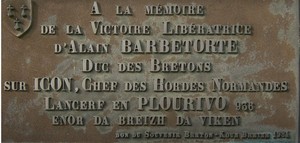
But Alain Barbetorte pursued them and the Normans were defeated in the moor of Plourivo near Paimpol.

There is an actoring plate of the battle in Plourivo.

However, no period text or any archaeological trace mentions the existence of such a battle in Plourivo.

Alain Barbetorte, grandson of the last king of Brittany, became the first Duke of Brittany. For three centuries, the big county houses will dispute the Breton country.

The Duchy of Brittany will exist from 936 to 1547, or almost six centuries of existence.